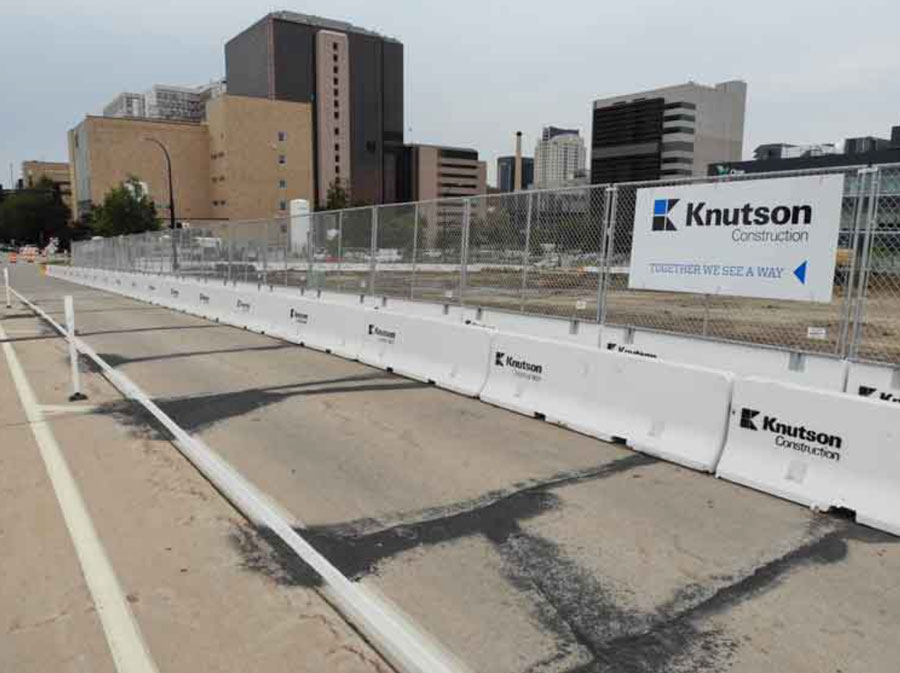
We know construction. And we know securing a construction site is never as simple as putting up a fence and calling it good.
Crews change. Subcontractors come and go. Deliveries arrive. Equipment moves. Leading edges change as the building goes up. Thousands, sometimes millions, of dollars in equipment and materials can be sitting behind a fence at any given time.
That is why securing a construction site is about a lot more than the outside perimeter.
It is about keeping the wrong people out and protecting the people working inside. It is about fall protection, leading-edge safety, equipment and material security, access and good planning. And with labor and material costs continuing to climb, getting those things right has never been more important.
Construction Is Getting Safer, But We Still Have Work to Do
There is some good news. According to the U.S. Bureau of Labor Statistics, workplace fatalities in private-sector construction declined 3.8% in 2024.
But look a little deeper and the numbers are still hard to ignore.
Construction recorded 1,034 workplace fatalities in 2024, more than any other private-industry sector. Of those fatalities, 389 resulted from falls, slips and trips.
Nearly 96% of those incidents were falls to a lower level. Construction also accounted for 48.8% of all fatal falls, slips and trips in private industry.
Think about that for a minute. Nearly half of the fatal falls, slips and trips occurring across private industry happened in construction.
Nonfatal falls are also taking workers off the job. Construction workers experienced falls, slips and trips resulting in days away from work at a rate of 30 cases per 10,000 full-time workers, compared with 22.6 across private industry.
Falls have been a construction problem for a long time. They continue to be one today.
Leading-Edge Safety Starts Before a Worker Gets There
OSHA requires workers constructing a leading edge 6 feet or more above a lower level to generally be protected by guardrail systems, safety net systems or personal fall-arrest systems.
We all know the rule. The bigger question is what happens before the worker gets to that edge.
Research from CPWR, The Center for Construction Research and Training, looked at real-world falls in construction and asked workers what happened.
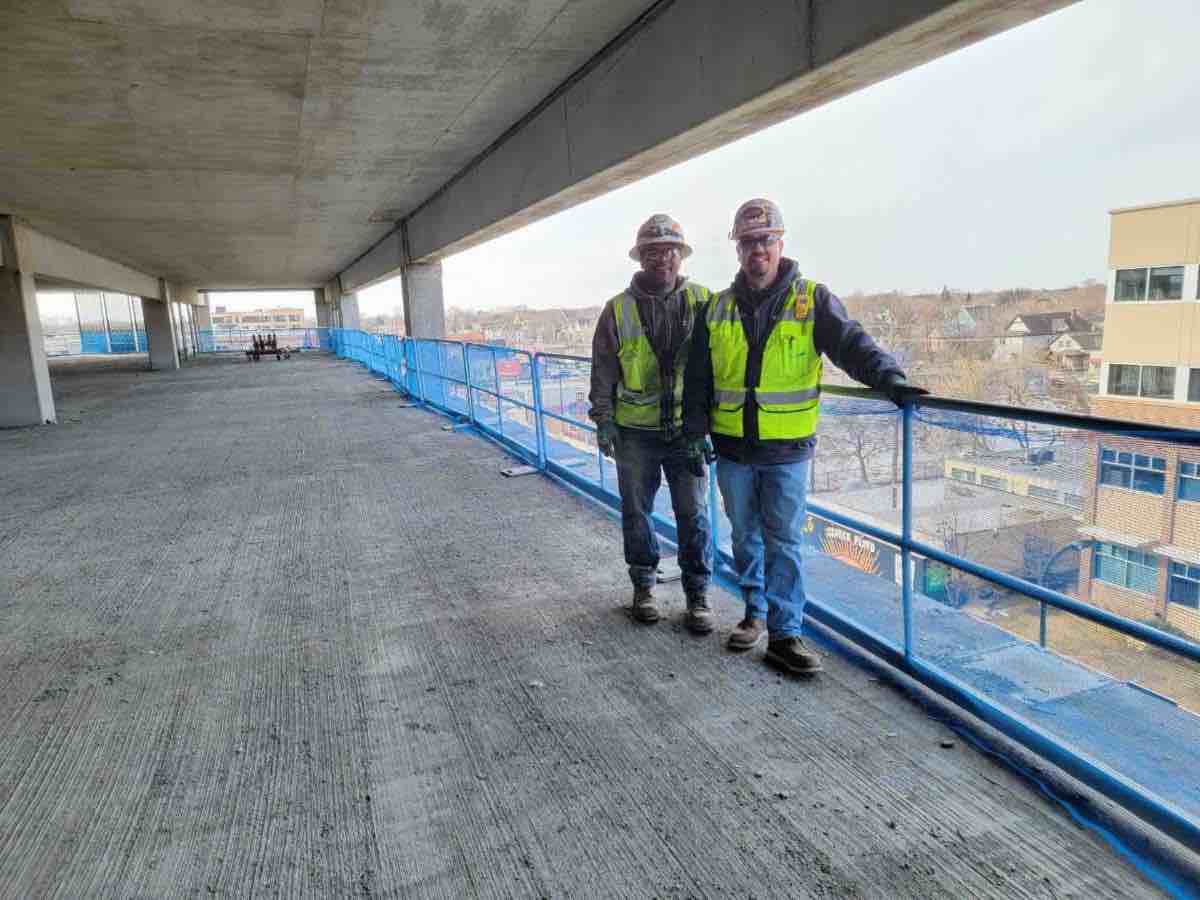
Insufficient or ineffective planning was the most frequently identified primary underlying cause of falls, cited in 27.4% of responses.
There was an even stronger connection between planning and whether fall protection was actually used.
When an employer or competent person did no fall-prevention planning, the odds of workers using fall protection were 71% lower.
Nearly half of the workers surveyed reported that no fall protection was being used at the time of their fall.
That tells us something important. Fall prevention cannot begin when somebody reaches the edge.
Where will the exposures be? How will they change as the building goes up? How will workers be protected? Can the protection move with the work? Who is responsible for making sure it happens?
Those conversations need to happen before the work does.
Securing a Construction Site Starts at the Outside Perimeter
Now look at the other edge of the job site.
Construction sites are busy places. Workers, subcontractors, delivery drivers, inspectors and equipment are moving in and out all day. Materials may sit onsite for weeks or months. Tools and heavy equipment are often spread across large projects.
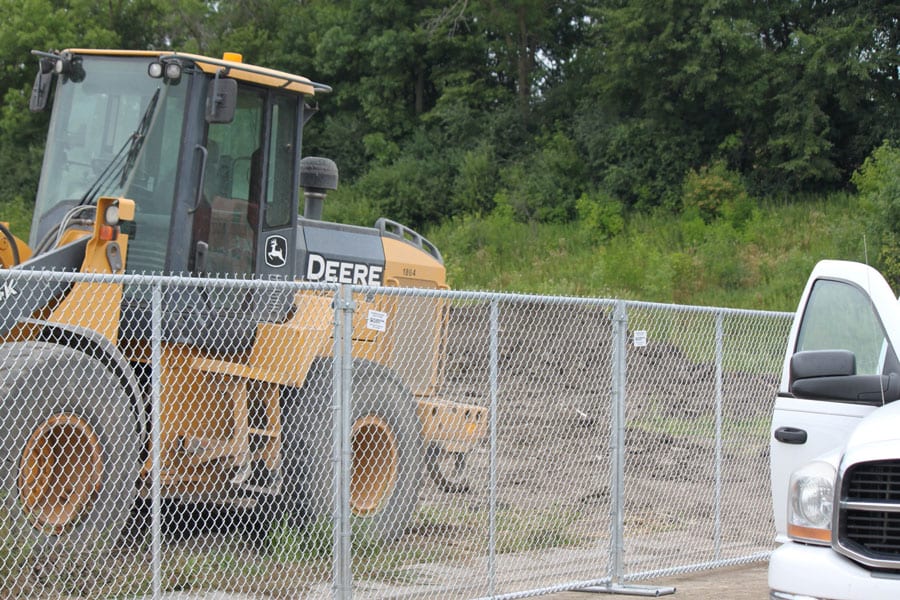
A secure construction perimeter helps define the active work zone, control access and protect what is inside.
And there is plenty worth protecting.
Estimates of construction and heavy-equipment theft in the United States range from $300 million to $1 billion every year. Verisk reports that approximately 85% of construction businesses experience some form of theft.
The cost does not stop with the stolen equipment.
A missing machine may have to be rented. Materials have to be reordered. Crews can be left waiting. Schedules get pushed. Productivity suffers.
We saw a pretty extreme example of this in Florida in 2025. Authorities broke up an alleged construction-equipment theft ring believed to be responsible for more than $2 million in stolen construction equipment, trailers and utility vehicles over four years. The investigation involved 45 felony cases across 17 jurisdictions.
Most contractors will never experience anything close to that scale, but stolen tools, materials and equipment are everyday problems in construction.
The lesson is simple. Securing a construction site needs to be part of the project plan, not something you start thinking about after something disappears.
What’s Behind the Fence Keeps Getting More Expensive
There is another reason construction perimeter security deserves attention. Everything behind that fence costs more.
According to an Associated General Contractors of America analysis released in July, prices for inputs to new nonresidential construction were 7.1% higher in June 2026 than a year earlier, while contractors’ bid prices increased just 3.5%.
Labor is not getting any easier either.
AGC’s 2026 Construction Hiring and Business Outlook found that 57% of contractors identified an insufficient supply of workers or subcontractors as a major concern. Another 56% cited rising direct labor costs and 53% cited worker quality.
More than four out of five firms reported difficulty filling hourly craft positions.
So think about what wasted time costs on today’s job site. A crew waiting for replacement materials. Workers stopping to repair something that should not be broken. Equipment that has to be replaced or rented. A safety system that has to be rebuilt every time the project changes.
When labor is hard to find and expensive to keep, protecting productivity becomes part of protecting the project.
Securing a Construction Site Starts With Better Planning
One of the biggest changes we see in construction safety is also one of the simplest.
Plan for the problem before you have the problem.
Before the project gets moving, look at the entire site. Where will the leading edges be? How will those edges change? Where will expensive equipment and materials be stored? How will people and deliveries enter the site? What happens to the perimeter as the project moves from one phase to another?
Technology is giving contractors more tools to answer those questions. AGC reports that 61% of contractors are using artificial intelligence or plan to increase their investment in it, including applications in estimating, design and preconstruction.
Technology will keep changing. Good construction sense does not.
Identify the problem early. Put a plan around it. Give workers the right tools. Make it simple enough that people will actually follow it.
Securing a Construction Site Takes All of Us
There is no single product, policy or piece of technology that makes a construction site secure.
It takes layers. A secure outside perimeter. Controlled access. Proper leading-edge protection. Good equipment. Training. Communication. Planning. And people willing to speak up when something is not right.
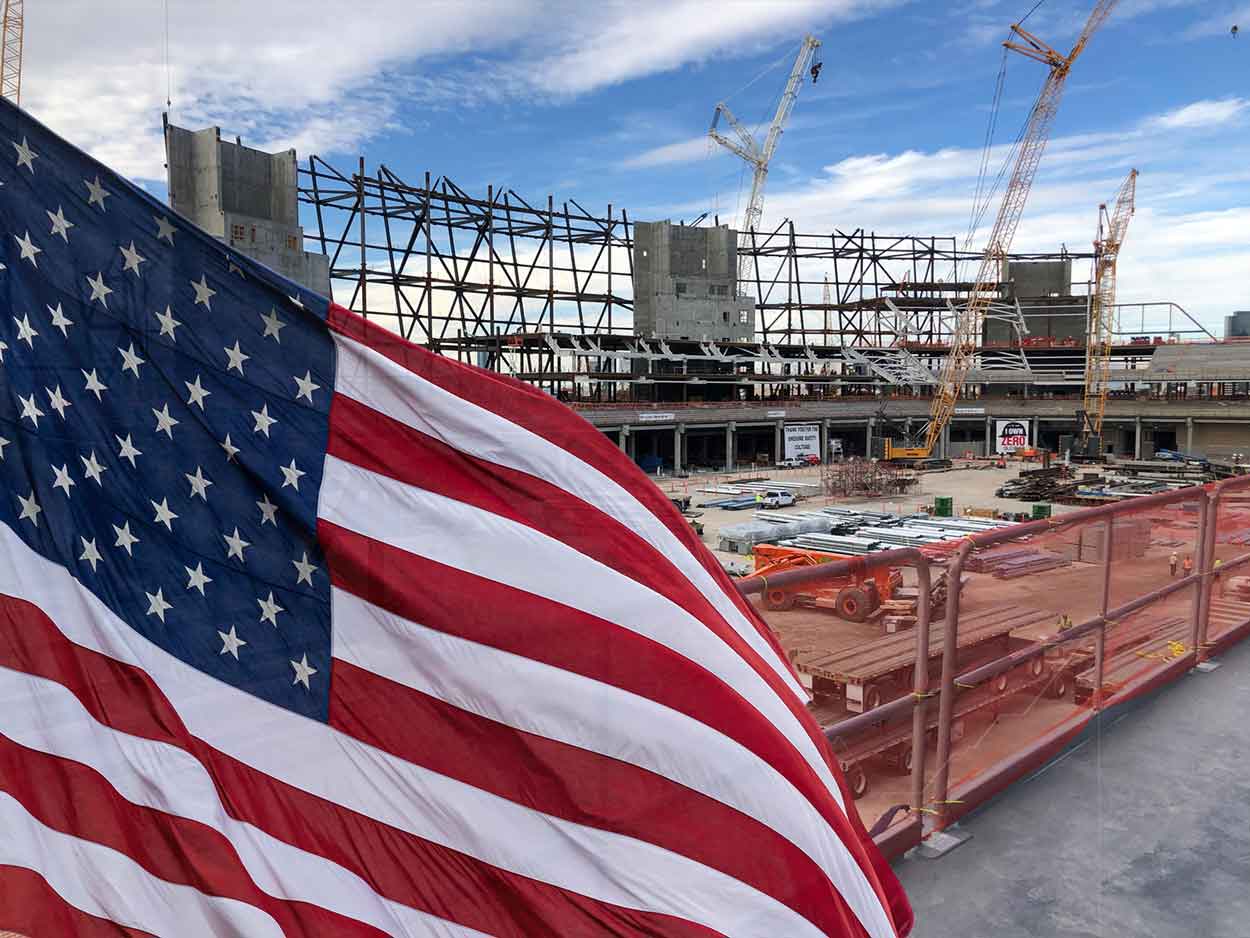
At Hilmerson Safety®, we started as safety consultants working alongside contractors in the field. We have seen what works, what doesn’t and what can happen when safety becomes an afterthought. That experience still shapes how we look at construction safety today.
Buildings get finished. Fences come down. Equipment moves to the next project.
Make sure the people who built it go home safe.
Born in the Field. Made in America.
More Construction Safety Insights
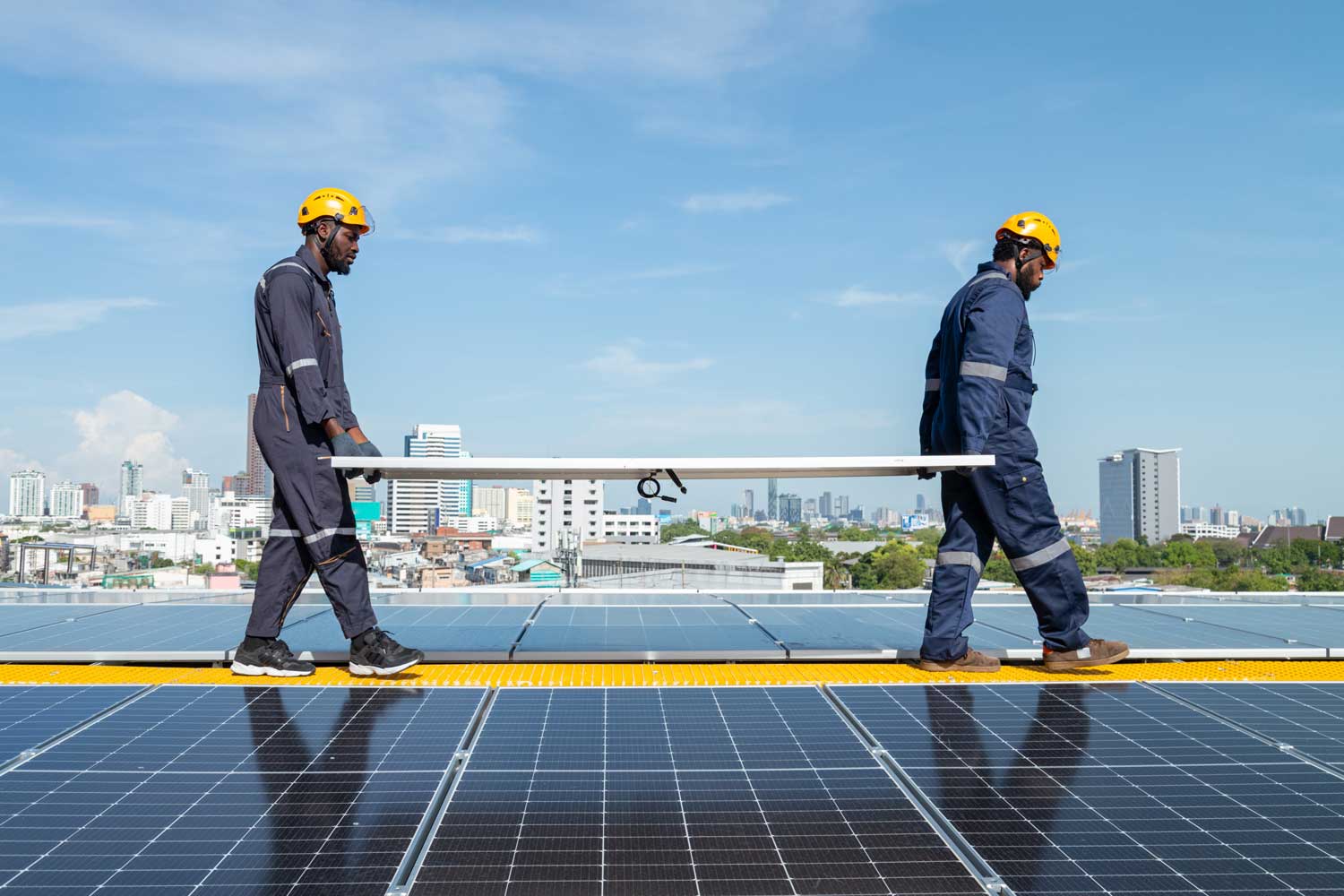
A Safe Solar Solution: How Hilmerson Safety Rail System™ Protects Workers During Solar Installations and Maintenance
As the push for renewable energy grows, solar panel
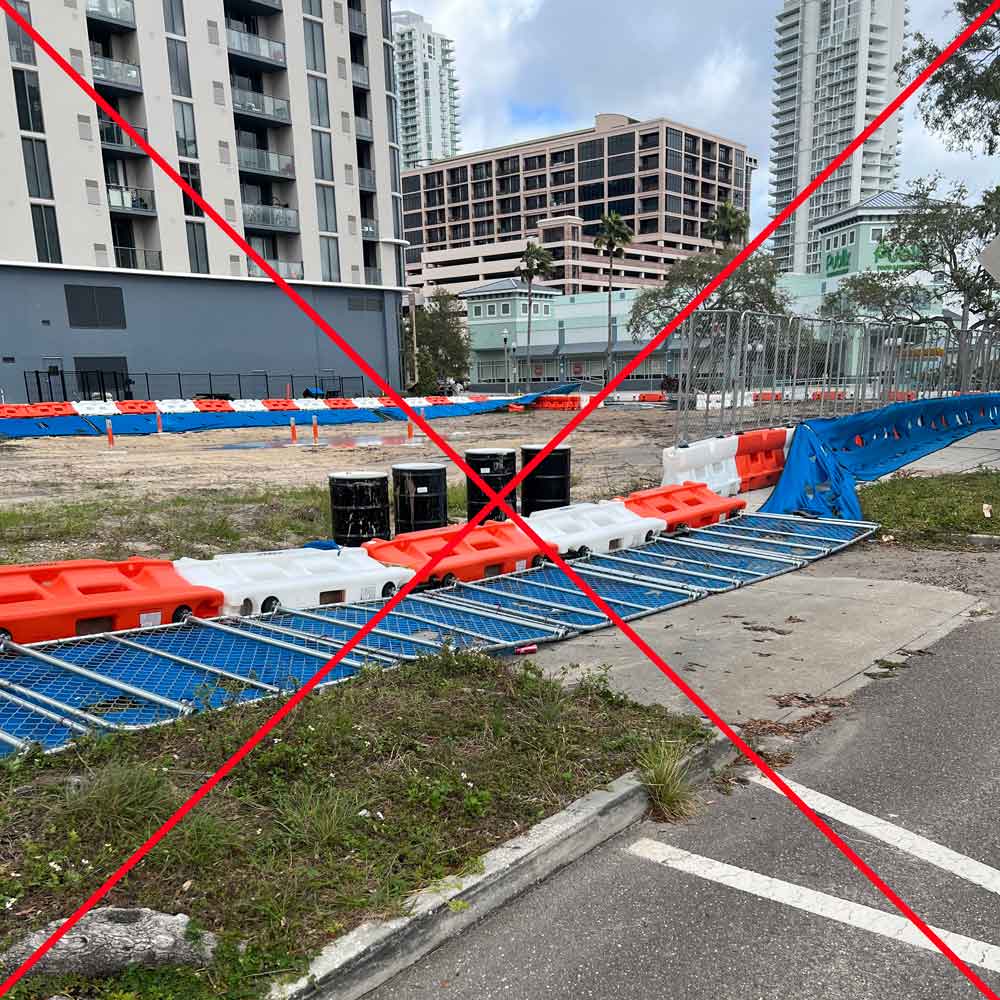
Withstanding Wind: The Hilmerson Barrier Fence System™
Tired of dealing with barrier fence panels tipping over
Ways Human Behavior Can Lead to Construction Accidents
Human Behaviors in Construction We don't "do" safety