Understanding Jersey Barriers on Construction Sites
If you’re asking what is a Jersey barrier, the simple answer is that it’s a heavy-duty barrier used to separate vehicles, control traffic and create a physical boundary around work areas.
Maybe you’re using Jersey barriers for the first time. Maybe you’ve been setting them on jobsites for 20 years. Either way, don’t assume one concrete barrier is the same as the next.
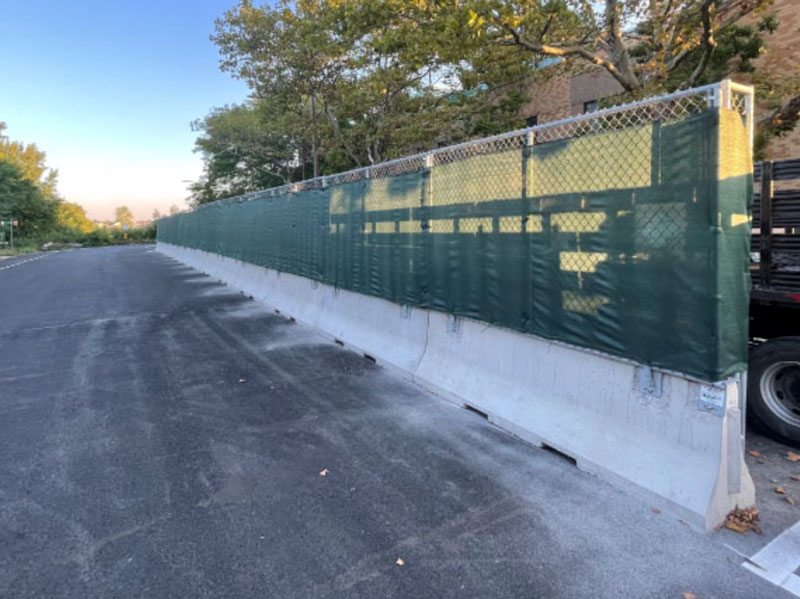
Jersey Barriers come in different lengths, weights, materials and configurations. What works on one jobsite may not work on another. And if you’re working on a DOT project or using barriers for impact protection, there may be specific requirements you need to meet. On construction sites, Jersey barriers can also do more than separate a work zone. With the right system, they can become the foundation for a tough, durable construction perimeter.
Here’s what you need to know before choosing a barrier for your next job.
Why Is It Called a Jersey Barrier?
The name “Jersey barrier” comes from the development and testing of concrete median barriers by New Jersey highway officials. While concrete barriers were used before then, the New Jersey Department of Transportation helped develop the safety-shape design that became widely used across the country.
Today, contractors use “Jersey barrier” as a catch-all term for many portable concrete barriers—even when the barrier doesn’t have the traditional New Jersey profile.
And depending on where you work, you may hear the same general type of barrier called a:
- Concrete barrier
- New Jersey barrier
- J barrier
- K-rail
- F-shape barrier
- Traffic barrierD
Different names. Different profiles. And they’re not necessarily interchangeable. The barrier you need comes down to the job, the application and the project requirements.
What Does a Jersey Barrier Do?
The purpose depends on the application.
On roadways, properly designed and installed concrete barriers can be used to separate opposing traffic, redirect vehicles, and protect work zones or hazards.
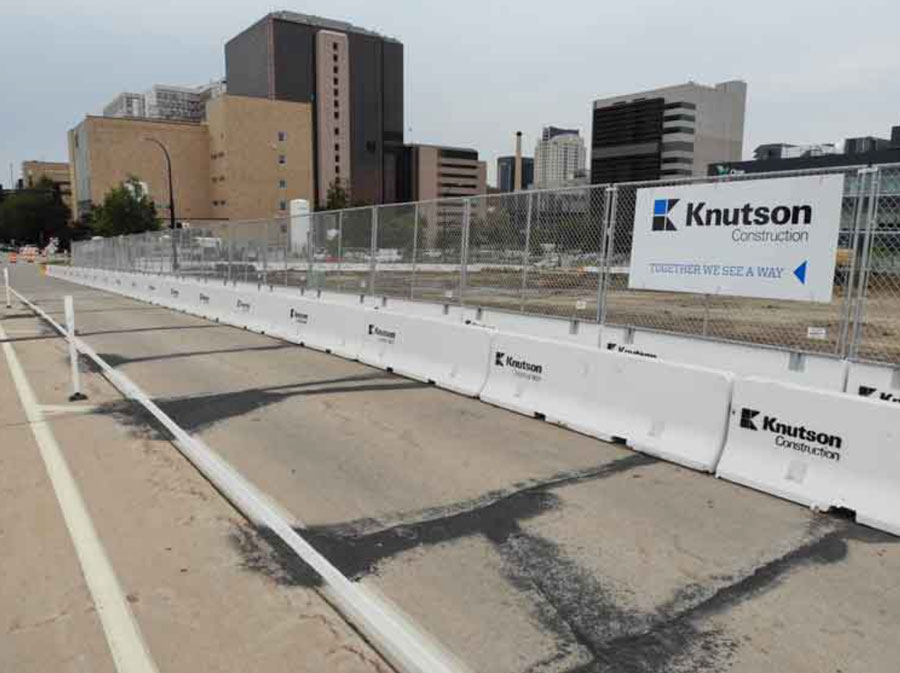
On construction sites, barriers can also be used to establish a strong physical perimeter between the jobsite and surrounding areas.
That can be especially valuable on large commercial construction projects in dense urban areas where crews may be working alongside vehicle traffic, pedestrian areas, sidewalks, or neighboring properties.
But there is an important distinction: not every barrier that looks similar performs the same job.
A concrete traffic barrier designed and installed for vehicle impacts is different from a lightweight channelizing device used primarily to direct traffic or pedestrians.
The application should determine the barrier.
There Is No One “Standard” Jersey Barrier Size
One of the biggest misconceptions about Jersey barriers is that they all come in one standard size. They don’t.
Deb Hilmerson, President and CEO of Hilmerson Safety®, regularly sees barriers in lengths including:
- 6 feet
- 8 fee
- 10 feet
- 12 feet
- 12 feet, 6 inches
- 15 feet
- 20 feet
Ten-foot barriers are especially common in the construction applications Hilmerson Safety® encounters, but that does not make 10 feet a universal standard.
Different lengths can also affect jobsite logistics.
For example, a contractor may choose a 20-foot barrier because one pick places 20 feet of barrier. Covering that same distance with 10-foot barriers requires two individual pieces to be lifted and positioned.
The right choice depends on the project, equipment, layout, and barrier requirements.
Concrete, Crumb Rubber and Water-Filled Barriers
Length isn’t the only difference. Barrier material and design can also affect how a barrier is transported, installed, maintained, and used on the jobsite.
Concrete Barriers
Precast concrete barriers are commonly used on construction sites and road projects because they create a substantial physical separation.
For certain traffic applications, individual sections may be designed to connect to one another so the barrier system performs as intended during an impact
Crumb Rubber Barriers
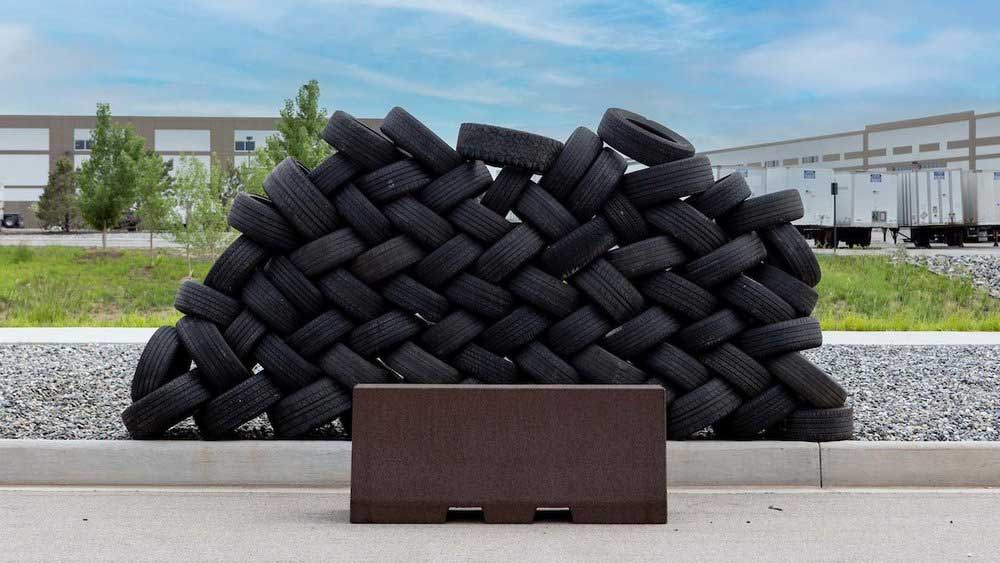
Crumb rubber barriers provide another option for certain construction applications. For example, Pretred Recycled Rubber Barriers are eco-friendly, made from recycled materials and weigh half that of a standard concrete barrier reducing freight and transportation costs. Their rubber design will not chip or crack, lowering maintenance.
Hilmerson Safety works with both concrete and crumb rubber barrier applications when perimeter fencing is required.
Water-Filled Barriers
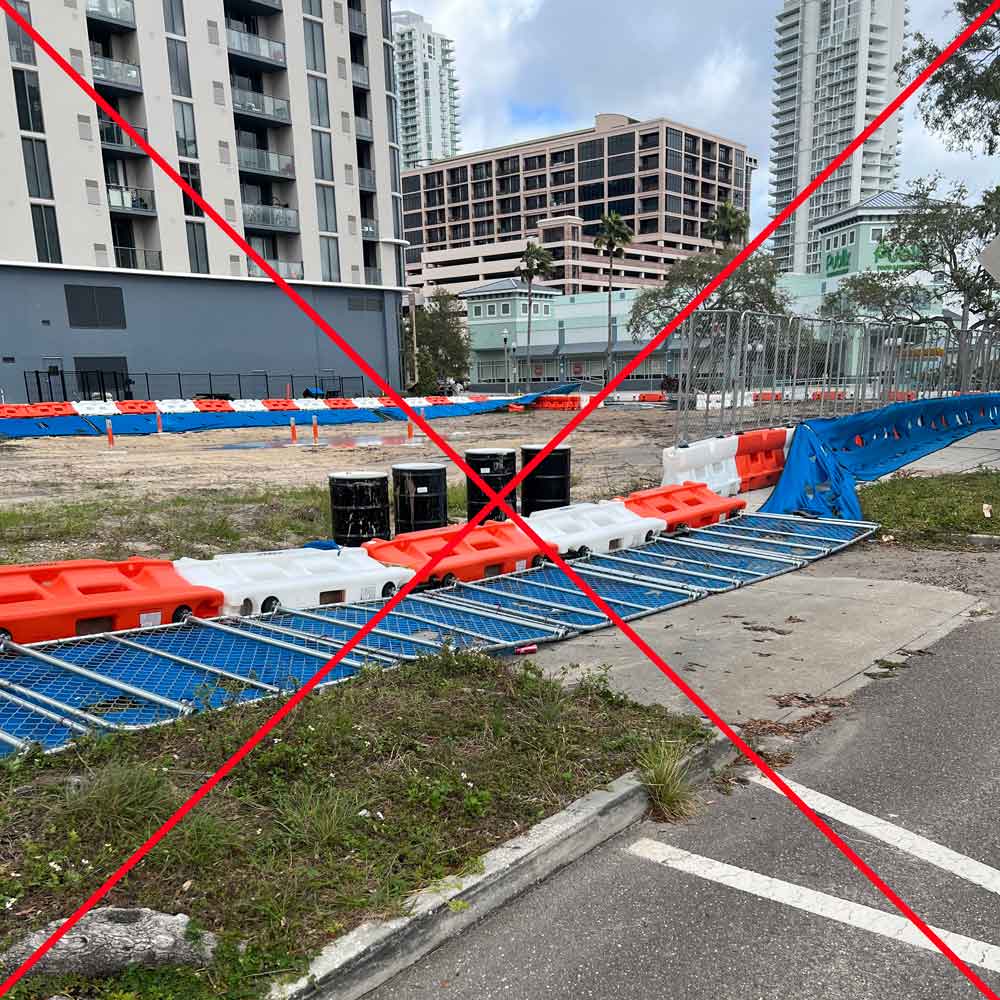
Water-filled barriers may look similar from a distance, but contractors need to understand exactly what system they are using.
Some water-filled products are channelizing devices rather than crashworthy traffic barriers. They may be useful for guiding vehicles or pedestrians, but that does not automatically make them a substitute for a concrete traffic barrier where impact protection is required. They are also not as wind-resistant.
Hilmerson Safety’s Barrier Fence System™ is designed for concrete and crumb rubber barriers, not water-filled barriers.
Jersey Barrier & Construction Barrier Comparison
Concrete Barrier
Typical Use
Construction perimeters, roadwork, traffic separation and active work zone protection.
Weight & Transport
Heavy; typically requires equipment to transport, lift and position.
Durability
Highly durable and suited for demanding, long-term construction applications.
Impact Protection
Certain systems are crash-tested when installed in the required configuration.
Hilmerson Barrier Fence System™
Compatible
Crumb Rubber Barrier
Typical Use
Construction perimeters and applications requiring substantial physical separation.
Weight & Transport
Lighter than concrete; easier and less costly to transport and position.
Durability
Highly durable; rubber construction will not chip or crack.
Impact Protection
Protection varies by the specific barrier system and its intended application.
Hilmerson Barrier Fence System™
Compatible
Water-Filled Barrier
Typical Use
Traffic or pedestrian channelization and temporary separation applications.
Weight & Transport
Lightweight when empty; easier to transport, move and reposition.
Durability
Durability varies depending on the specific product and application.
Impact Protection
Some are channelizers and should not be assumed crashworthy.
Hilmerson Barrier Fence System™
Not Compatible
Jersey Barriers on DOT Projects
Where the barrier is being installed is just as important as what it looks like.
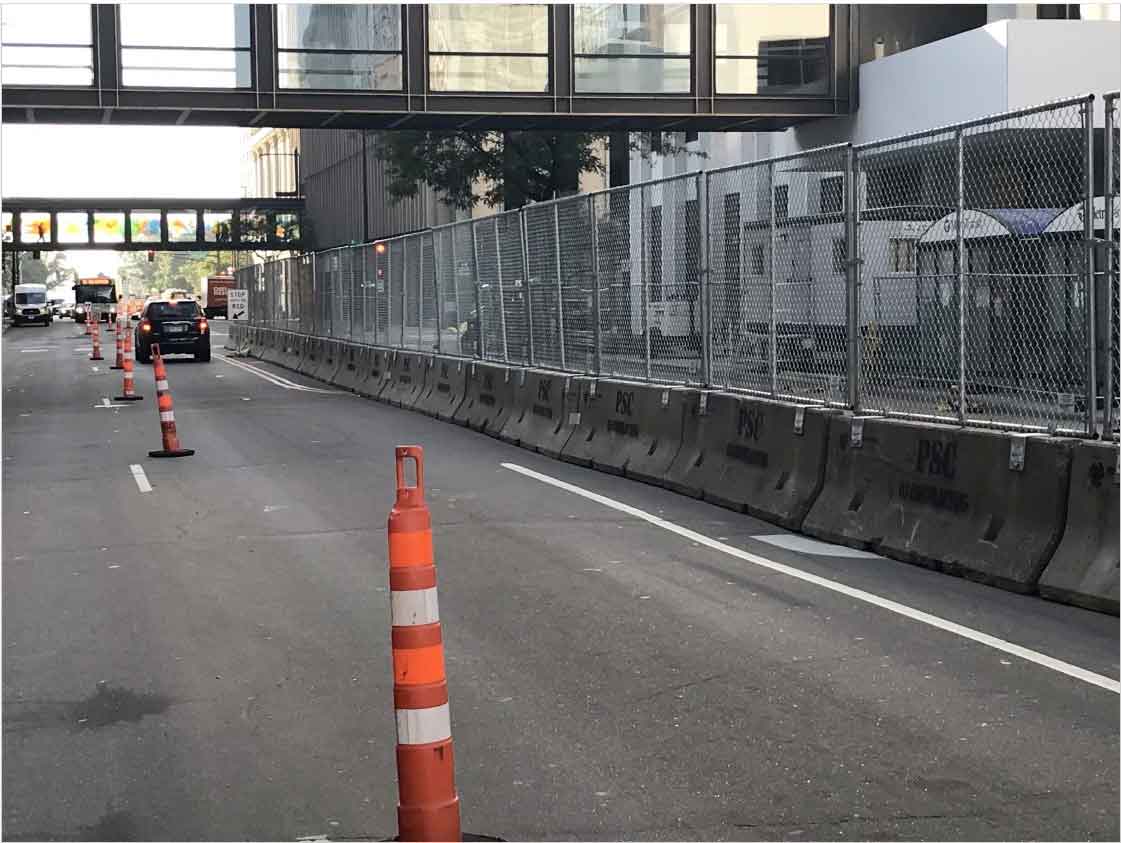
A concrete barrier being used around a general construction site may have very different requirements from one being installed alongside an active highway.
Roadway applications can require crash-tested barrier systems and specific installation configurations.
That can include considerations such as:
- Barrier profile
- Barrier height
- Connection method
- Anchoring or pinning
- Deflection
- End treatments
- Crash-testing requirements
Requirements can also vary by state and application.
For DOT work, contractors should always review the applicable state DOT specifications and project documents rather than assuming that any concrete Jersey barrier is acceptable.
Do Jersey Barriers Need to Be Connected?
Sometimes.
Portable concrete barrier systems used for traffic protection may require individual sections to be physically connected so the system performs properly during an impact.
The connection can help the individual sections function together rather than simply acting as separate concrete blocks.
Renting vs. Buying Jersey Barriers
Another practical question is whether to rent or purchase the barriers. Both are common.
For contractors who repeatedly use concrete barriers and have the space and equipment to transport and store them, ownership may make sense.
But concrete barriers are big, heavy, and difficult to store.
For a contractor who only needs them for a specific project, renting can eliminate the question of what happens to dozens, or hundreds, of feet of concrete barrier once the project is finished.
Rental providers can deliver the barriers, then pick them back up when the project is complete.
The right decision comes down to how often they will be used, project duration, transportation, storage, and overall cost.
Turning a Jersey Barrier Into Construction Perimeter Protection
A Jersey barrier can do more than establish a low physical boundary.
With the right fencing system, that existing barrier can become the foundation for a much taller construction perimeter.
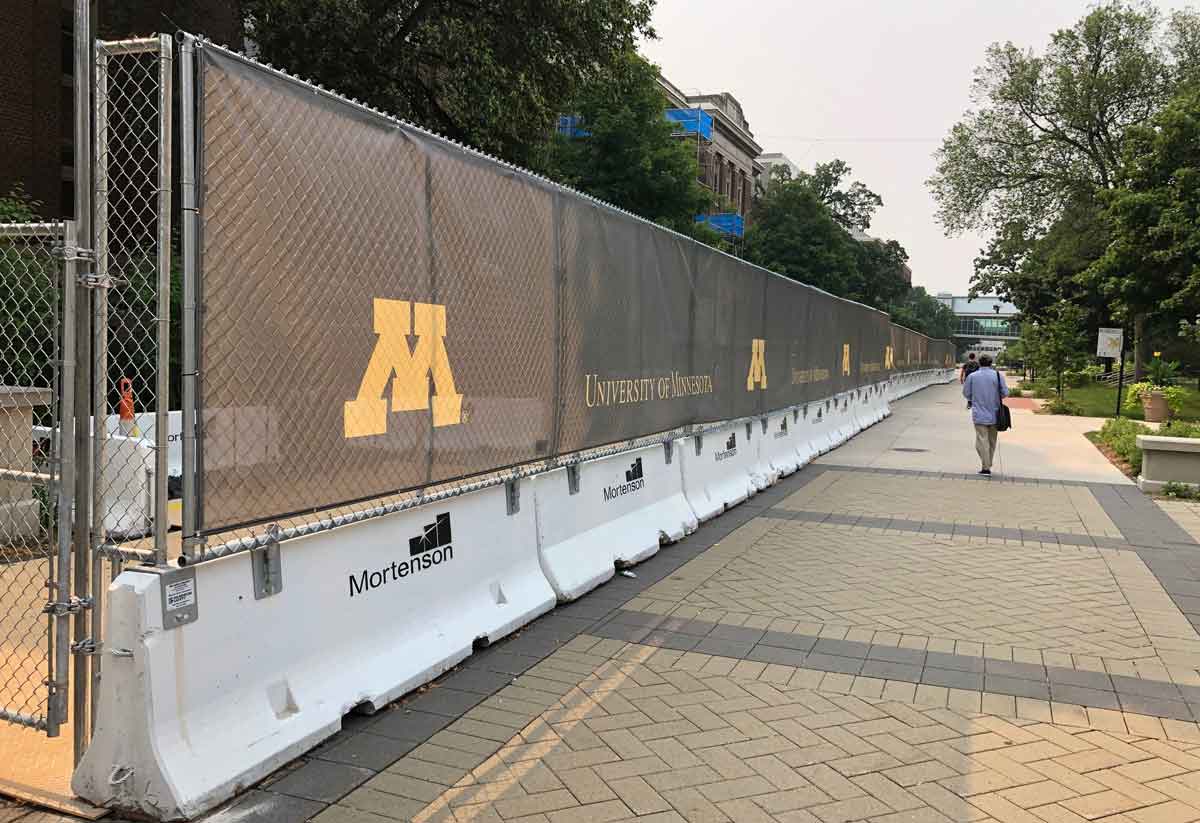
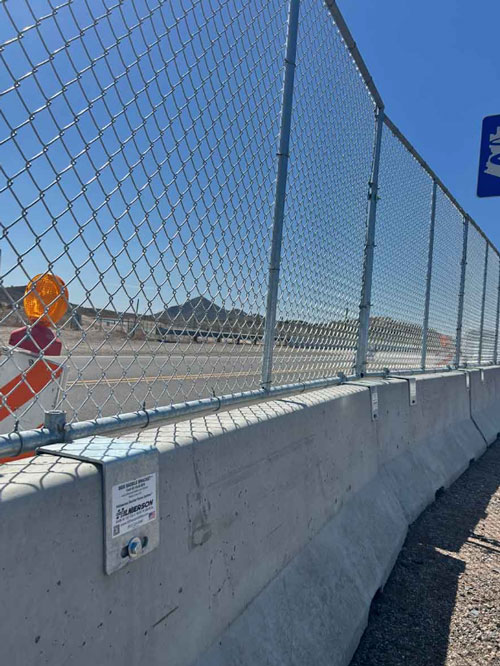
The Hilmerson Barrier Fence System™ is designed to mount directly to concrete and crumb rubber barriers, allowing contractors to add durable steel fence panels above the barrier.
That gives contractors a way to use the barrier already surrounding the site as part of a more complete perimeter fencing solution.
For busy commercial construction sites, this can help create a clear, durable perimeter while keeping the system organized and built for demanding field conditions.
Hilmerson Safety’s patented Side Saddle Backet™ also provides an option for mounting fence panels to the side of compatible barriers when project conditions call for it.
Before You Choose a Jersey Barrier
Don’t start with the assumption that every barrier is the same. Start with the job.
Ask:
- Where will the barrier be used?
- Is it a general construction application or DOT roadway project?
- What barrier profile and material does the project require?
- What lengths make sense for the site?
- Does the system need to be crash-tested?
- Do individual sections need to be connected or anchored?
- Will the barriers be rented or purchased?
- Does the site also require perimeter fencing?
- How will that fencing attach to the selected barrier?
Those details can affect everything from installation and logistics to compliance and perimeter security.
Building a Safer Construction Perimeter
A Jersey barrier may look like a simple piece of concrete, but choosing the right one comes down to how and where it will be used. Size, material, profile, connections and project requirements can vary from one job to the next. Know what your project requires before barriers show up on site.
And if those barriers are also part of your construction perimeter, put them to work. The Hilmerson Barrier Fence System™ mounts to compatible concrete and crumb rubber barriers to create a tough, construction-grade™ perimeter built for demanding jobsites.
Start with the right barrier. Build a perimeter that works as hard as the rest of your equipment.