Construction sites are full of energy.
Motion.
Gravity.
Electricity.
Pressure.
Heat.
Chemicals.
The question is not whether energy exists on a jobsite.
It always does.
The real question is whether workers recognize what that energy could do before someone gets hurt.
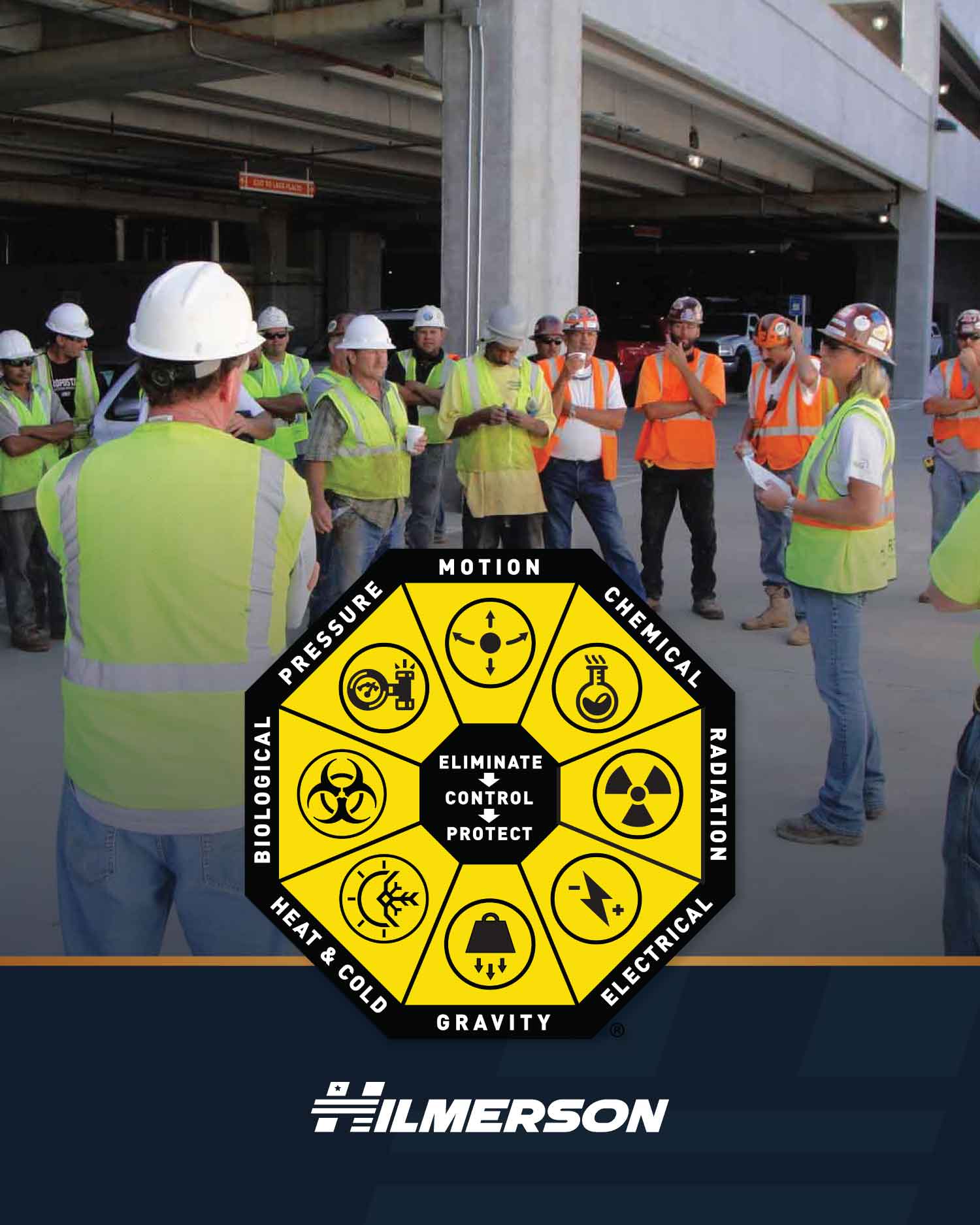
That is why Deb Hilmerson still believes strongly in the HRP Energy Octagon™ and Hazard Recognition Plus™ process she trained on years ago while working alongside construction companies as a safety consultant.
This was never about sitting in a classroom checking a box.
It was about helping workers think differently while standing in the middle of the work on the jobsite. Looking around. Talking as a team. Identifying what could go wrong before it does.
As Deb says: “You don’t always know hazards depending on your experience level.”
An apprentice may not see the same thing a superintendent sees.
A laborer may catch something someone else walked past.
A crane operator may recognize a pressure hazard another worker never even considered.
That is why safety conversations work best when everyone is involved.
The 8-5-3 Philosophy
The HRP process was built around what Michael Fleming, Strategic Partner at HSE Global, calls the “8-5-3 philosophy.”
As Fleming explains:
“The framework includes 8 energy categories, 5 Thought Process Questions, and 3 energy management techniques.”
Simple enough for the field.
Powerful enough to change how crews approach risk.
Originally proven in high-risk environments like oil and gas construction and drilling, the process has been used globally for more than 30 years.
The 8 Energy Categories
The HRP Energy Octagon™ helps crews identify the energy sources behind hazards on a jobsite.
Rather than telling workers to “look for hazards,” the process helps them recognize the energy creating the exposure in the first place.
Motion
Equipment moving.
Swing radius.
Dump trucks backing up.
Crane movement.
A jib could snap.
A worker could get struck by moving equipment.
A blind spot could turn serious fast.
Chemical
Concrete burns.
Diesel fueling.
Waterproofing chemicals.
Welding fumes.
Some exposures happen immediately.
Others build over time.
Radiation
Most workers do not immediately think of radiation.
But it exists.
Sun exposure.
Lasers used for laying out lines.
Naturally Occurring Radioactive Material (NORM).
Electrical
Temporary power.
Overhead lines.
Underground lines
Battery sparks.
One mistake around electricity changes everything.
Gravity
Falls remain one of the biggest risks in construction.
Anything that goes up most likely will come down.
Materials.
Tools.
Equipment.
People.
The risk is not just overhead. People on the ground can be exposed too.
Heat and Cold
Weather exposure affects decision-making, reaction time, and physical performance.
Crews need the right gear.
The right hydration.
The right preparation.
Liquid nitrogen exposure can create freezing hazards.
Welding creates heat and fire exposure.
Equipment engines get hot.
Biological
A cut or laceration can become much more serious depending on exposure.
Bloodborne Pathogens (BBP’S).
Bacteria.
Contaminated materials.
Blood exposure itself becomes a biological hazard.
Training, protective gloves, and effective controls need to be part of the plan before the work starts.
Pressure
Hydraulic systems.
Oil and gas lines.
Compressed systems.
Pressure is not always visible.
But when it releases unexpectedly, the outcome can be severe.
The 5 Thought Process Questions
The HRP process was never meant to sit in a binder on the shelf or stay inside a classroom.
It works best out on the jobsite.
Walking the job.
Observing the conditions.
Having real conversations with the crew before the task starts.
That is where the five HRP Thought Process™ questions come in.
“Our trademarked HRP Thought Process questions remain the same since the origin over 3 decades ago,” says Fleming. “They work in ANY industry and ESPECIALLY in construction.”
The five questions are simple:
-
What is the job?
-
What energy is involved?
-
Where is the energy going?
-
How will we manage the energy for a safe job?
-
What are the specific stop-the-job triggers?
Simple questions but powerful when applied consistently.
But they force crews to slow down and think through the work before something goes wrong.
Not after.
Before.
And the discussion should involve everyone. All tradespeople.
The laborer.
The apprentice.
The foreman.
The superintendent.
Why? Because not everyone sees the same hazard.
An apprentice may notice something different than a superintendent.
A laborer may recognize a risk someone else walked past.
Experience changes what people identify and how they respond to it.
At the core, the process revolves around on key question:
“What could happen to you?”
That is the conversation.
Not lectures.
Not complicated terminology.
Real conversations workers understand.
The more people actively identify hazards together, the safer and stronger the jobsite becomes.
As Fleming shared: “HRP is the difference between hope and certainty, providing actual tools to find the hazards.”
The 3 Energy Management Techniques
Once hazards are identified, the next step is managing the energy.
The HRP process teaches three simple approaches:
Eliminate.
Control.
Protect.
First, try to eliminate the hazard whenever possible.
That is one reason Deb has always believed strongly in engineered safety systems.
Guardrails eliminate exposure better than relying only on PPE after the fact.
The goal is always to remove the exposure first whenever possible.
If the hazard cannot be eliminated, the next step is controlling it.
That may mean creating restricted access zones.
Lockout/tagout procedures.
Traffic control plans.
Equipment shielding.
Spotters.
Barriers.
The goal is reducing the chance the energy reaches the worker.
Then comes protection.
Hard hats.
Harnesses.
Face shields.
Protective gloves.
FR clothing.
Respirators.
Protection is still important.
But PPE should never be the first line of defense when a stronger control is possible.
Simple. Practical. Field-focused.
Safety Conversations Are Where This Tool Works Best
The HRP Energy Octagon™ was never meant to sit in a binder.
It works best in conversation.
Out on the jobsite.
Before the work begins.
Walking the work.
When the full crew is involved.
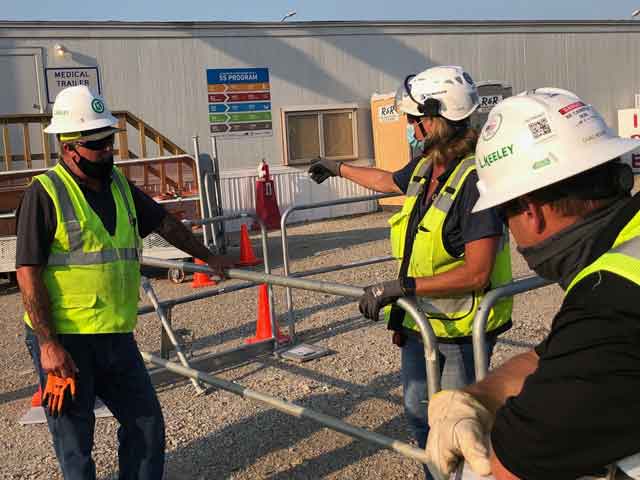
“What potentially can happen to you?”
That is the discussion.
Real conversations workers understand.
The laborer should be involved.
The apprentice should be involved.
The superintendent should be involved.
Not everyone sees the same hazard.
A Better Way to Think About Safety
Construction safety improves when workers are engaged in the process.
Not talked at.
Heard.
Included in the process.
The HRP Energy Octagon™ gives crews a common language to identify hazards before incidents happen.
That is why this approach continues to resonate decades later.
Stay aware.
Keep talking.
Get everyone involved.
Because safer jobsites aren’t built by one person, they are built by the entire crew.
Special thanks to Michael Fleming, Strategic Partner at HSE Global, for sharing additional background and insight into the HRP Energy Octagon™ and Hazard Recognition Plus™ process.
To learn more, visit: decisionpoint.net and HSEglobal.com
About Hilmerson Safety
Hilmerson Safety® is a full-service safety product design and manufacturing company serving the construction industry. Since 2001 Hilmerson Safety® has been working with construction industry leaders and contractors to develop safe, lean, construction-grade™ products and solutions that add to the company’s bottom line.
For more information email us or call (952) 239-0125