Last updated February 2026
Safety Railings for Construction
Light-gauge safety railings for construction have been the industry standard for a long time. Most job sites stick with the same yellow-painted guardrails because that’s what the specs have called for years.
But being familiar doesn’t make them reliable.
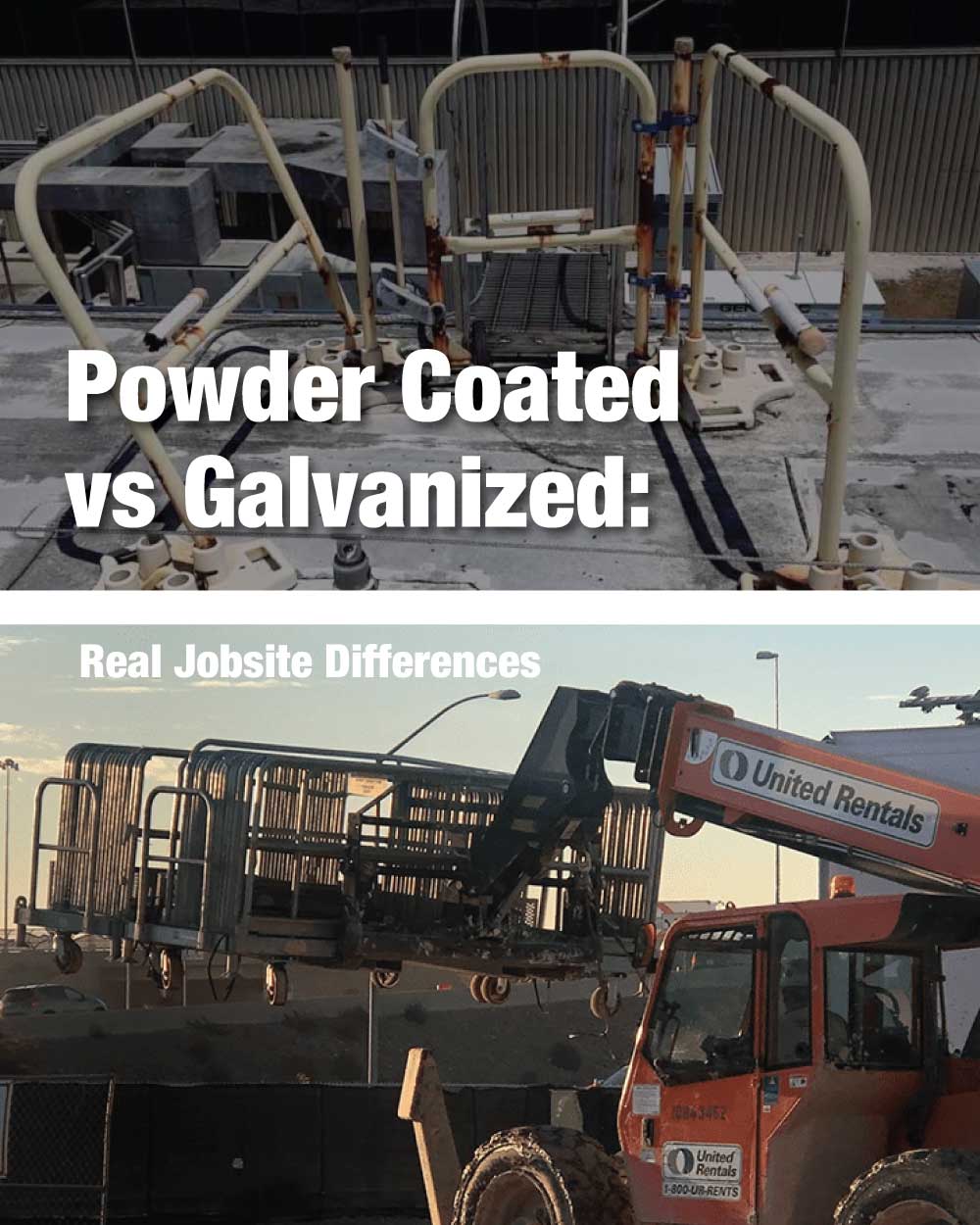
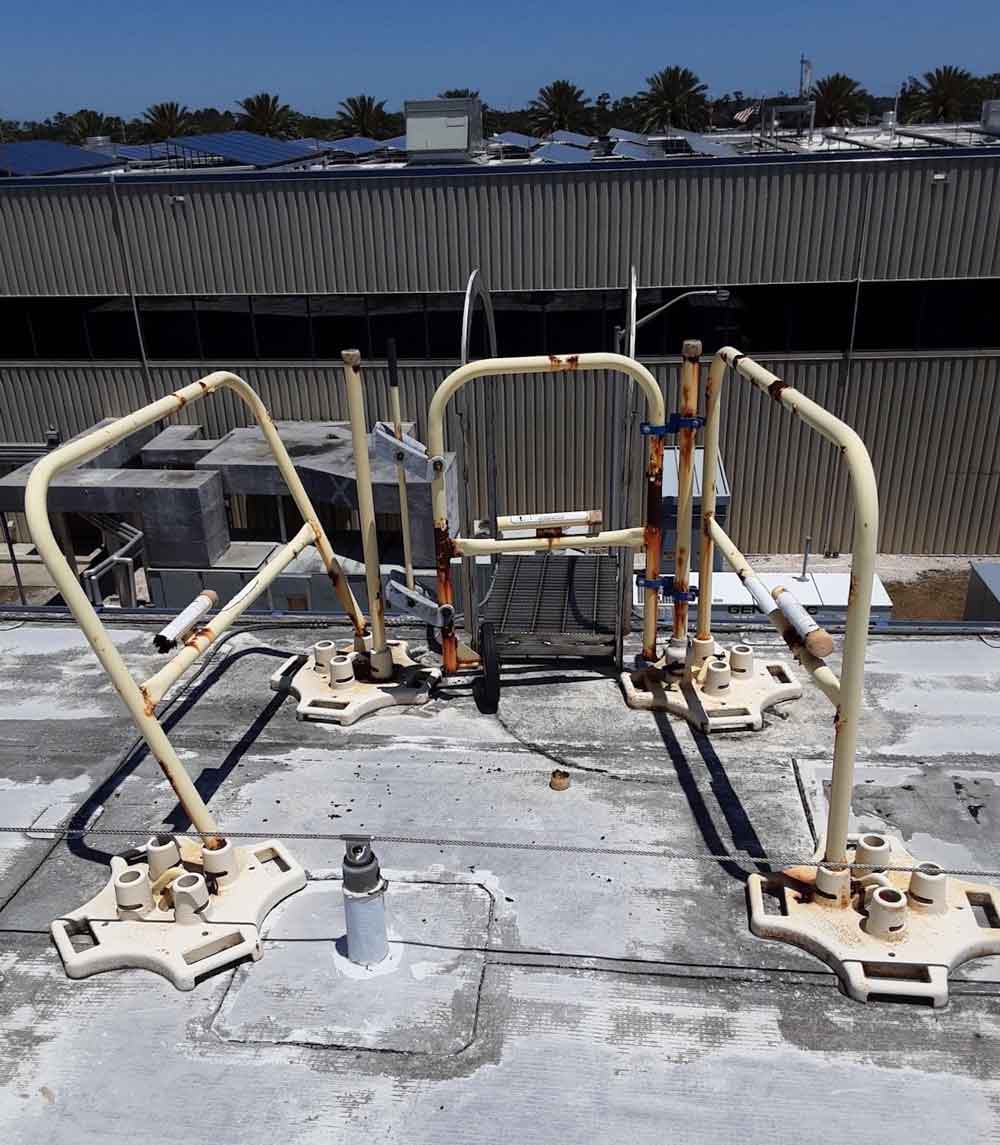
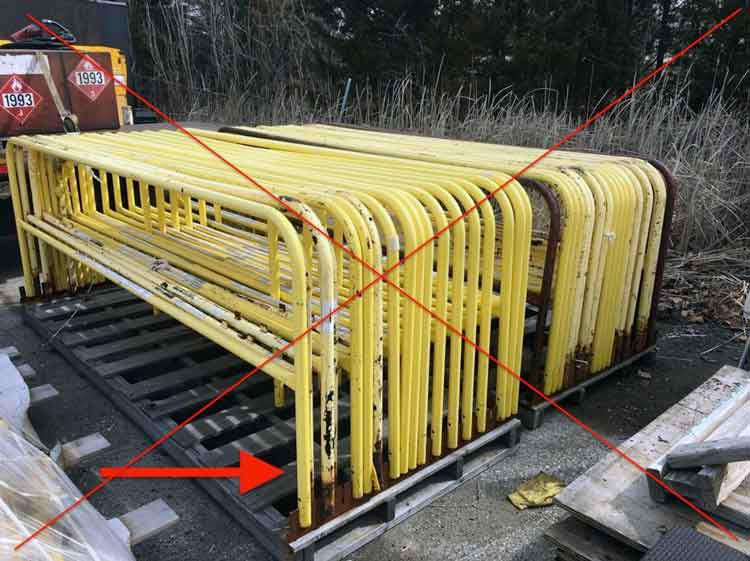
After years of inspections and time spent on active job sites, we’ve seen the same issue over and over again: light-gauge painted rails are only dependable in the short term. Within five years, many begin to rust, erode, and weaken, turning a fall protection system into a liability.
Falls remain the leading cause of death in construction.
And when rust and corrosion compromise a guardrail’s integrity, the risk isn’t theoretical. It’s real, and it shows up when crews trust a system that can no longer perform.
Rust on Guardrails
Light-gauge painted safety railings often rust and deteriorate within five years, especially in harsh climates. Once corrosion sets in, the system may still look acceptable, but corrosion has already weakened it.
For a long time, there weren’t many alternatives. Today, there are.
Modern construction guardrail systems have come a long way from the painted yellow rails many of us grew up with.
If you’re evaluating a new safety railing system, here are four factors you should consider before investing.
Durability
Start with the basics.
How long do you need the guardrail system to last?
Will it be moved, reused, craned, forked, or transported between projects?
What kind of climate will it be exposed to?
Construction-grade™ guardrails take abuse. They live outdoors. Crews are constantly moving them around the site. They’re stacked, lifted, and repositioned throughout the life of a project. Durability isn’t a nice-to-have, it’s the baseline.
If you’re looking for a system built for construction realities, heavy-duty steel that’s hot-dipped galvanized inside and out makes the difference. Galvanized guardrails can last 15–20 years longer than painted light-gauge systems. That longevity means the system can be reused across multiple projects without sacrificing safety.
A galvanized guardrail stands up to forklifts, cranes, weather, and UV exposure with minimal damage. Snow and rain can pool at the base. The sun can beat down on the rails. The system holds its integrity because corrosion never gets the upper hand.
Durability also lowers risk. Fewer failures mean fewer OSHA concerns, fewer delays, and fewer incidents tied to degraded equipment.
Expert Tip:
If a project requires yellow rails, galvanize first and paint second. Skipping that step significantly increases the risk of rust and premature failure.

Time to Install and Maintain
At a glance, many guardrail systems look similar. The difference shows up during installation.
Older safety railing systems often rely on complicated assemblies, multiple components, and mechanical compression styles. More parts mean more time, more opportunity for mistakes, and more inconsistency across crews.
Hidden locking mechanisms make it even harder. If you can’t clearly see whether a system is locked, you don’t know you’re at risk until something fails.
The safest systems are also the simplest. Fewer components. Clear engagement points. A locking mechanism that’s visible and easy to inspect.
Expert Tip:
Look for a system with minimal parts: a rail, a base, and a visible locking mechanism that can be quickly checked during inspections.
Check out how quick and easy it is to install our Hilmerson Safety Rail System in the video below.
Cost vs. Value (ROI)
Painted light-gauge guardrails usually cost less upfront. That’s why they’re still common.
But over time, the numbers tell a different story.
A galvanized guardrail system typically costs only 5–10% more initially, yet lasts 20+ years compared to the five-year lifespan of painted rails. Because galvanized systems are reusable, they reduce repeat purchases, disposal fees, and labor costs associated with constant replacement.
Expert Tip:
Hot-dipped galvanized guardrails can be reused and re-rented for decades. When managed as part of a fleet, they become an asset that pays for itself.
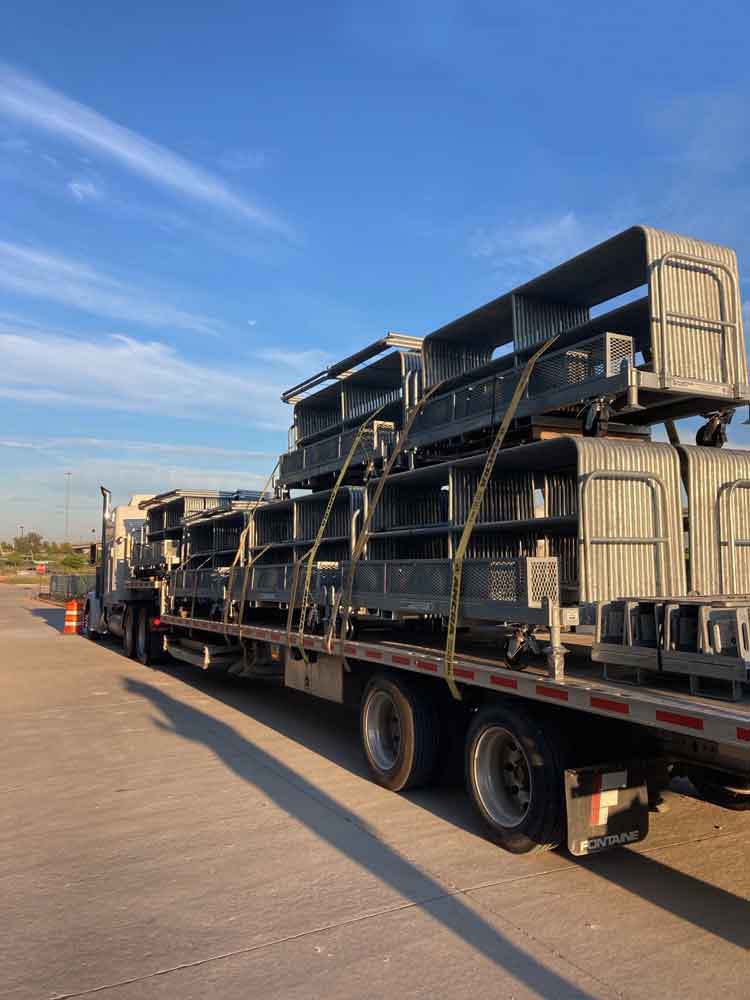
Versatility
Construction sites are never one-size-fits-all.
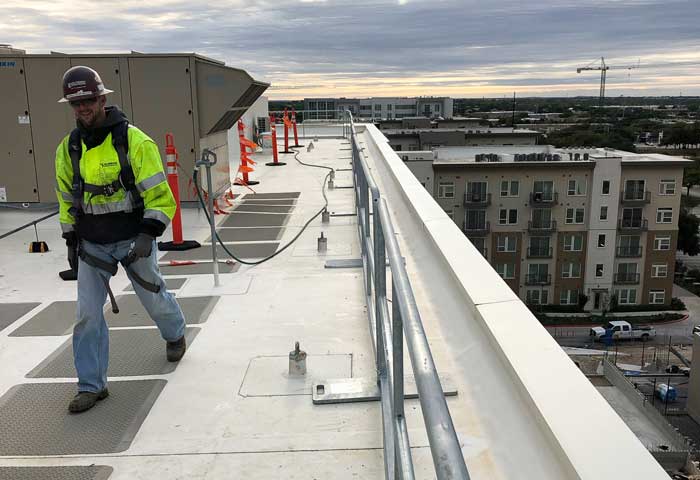
Safety railings for construction are used across leading edges, floor openings, stairwells, elevator shafts, roof perimeters, parapet walls, and temporary access points. Because each application presents different load conditions and attachment requirements, a one-size-fits-all railing often introduces risk instead of reducing it.
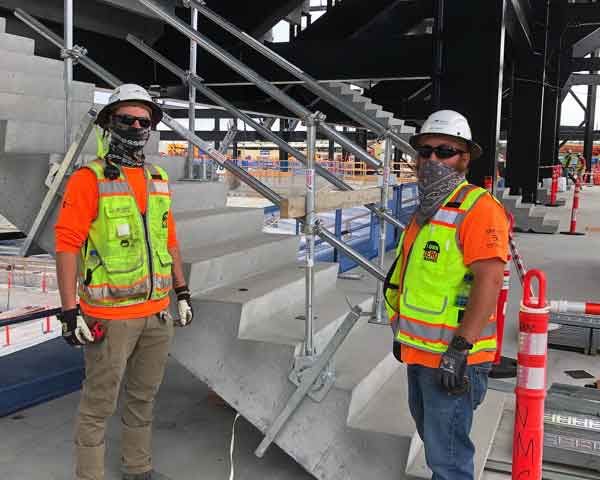
A versatile guardrail system includes engineered attachment options such as stair and slab grabbers, wall-mount plates, and parapet clamps. These solutions remove guesswork and reduce the need for makeshift connections. Check out our kits and applications page to see all our engineered attachments for the Hilmerson Safety Rail System.
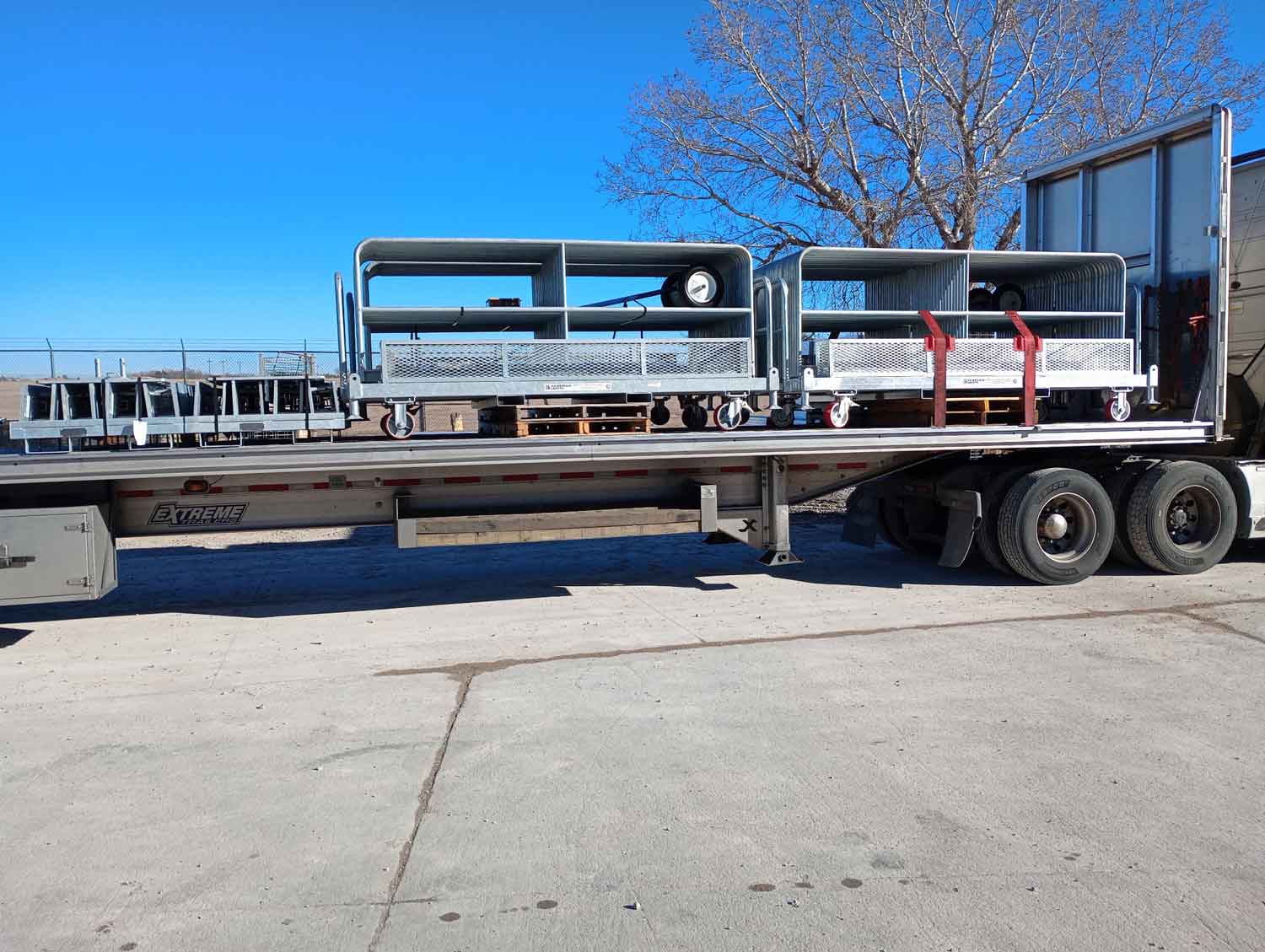
Guardrail carts add another layer of efficiency. They simplify transport, storage, inspection, and deployment. On install day, systems roll directly to where they’re needed. When the project wraps, everything stacks and stores cleanly for the next job.
Expert Tip:
For safer, faster deployment, choose a guardrail system designed with engineered attachments and transport carts — not workarounds.
Why We Built the Hilmerson Safety Rail System™
We didn’t set out to make “another” guardrail system. We built the Hilmerson Safety Rail System™ because the options in the field weren’t good enough.
Crews were wasting time building and rebuilding guardrails. Painted rails were rusting out before projects were even finished. Safety managers were inheriting liability from systems that looked fine but couldn’t be trusted.
So we went back to the basics and asked one question: What would a safety railing system look like if it were actually designed for construction?
The Hilmerson Safety Rail System™ is built from galvanized, heavy-duty steel that exceeds OSHA requirements and stands up to real jobsite abuse. It installs quickly, locks visibly, and inspects easily — reducing labor time and installation errors. It’s reusable across projects, stores cleanly on engineered carts, and pays for itself over years of use instead of ending up in a dumpster.
Most importantly, it’s safety railing for construction that crews trust.
About Hilmerson Safety
Hilmerson Safety® is a full-service safety product design and manufacturing company serving the construction industry. Since 2001 Hilmerson Safety® has been working with construction industry leaders and contractors to develop safe, lean, construction-grade™ products and solutions that add to the company’s bottom line.
For more information email us or call (952) 239-0125